

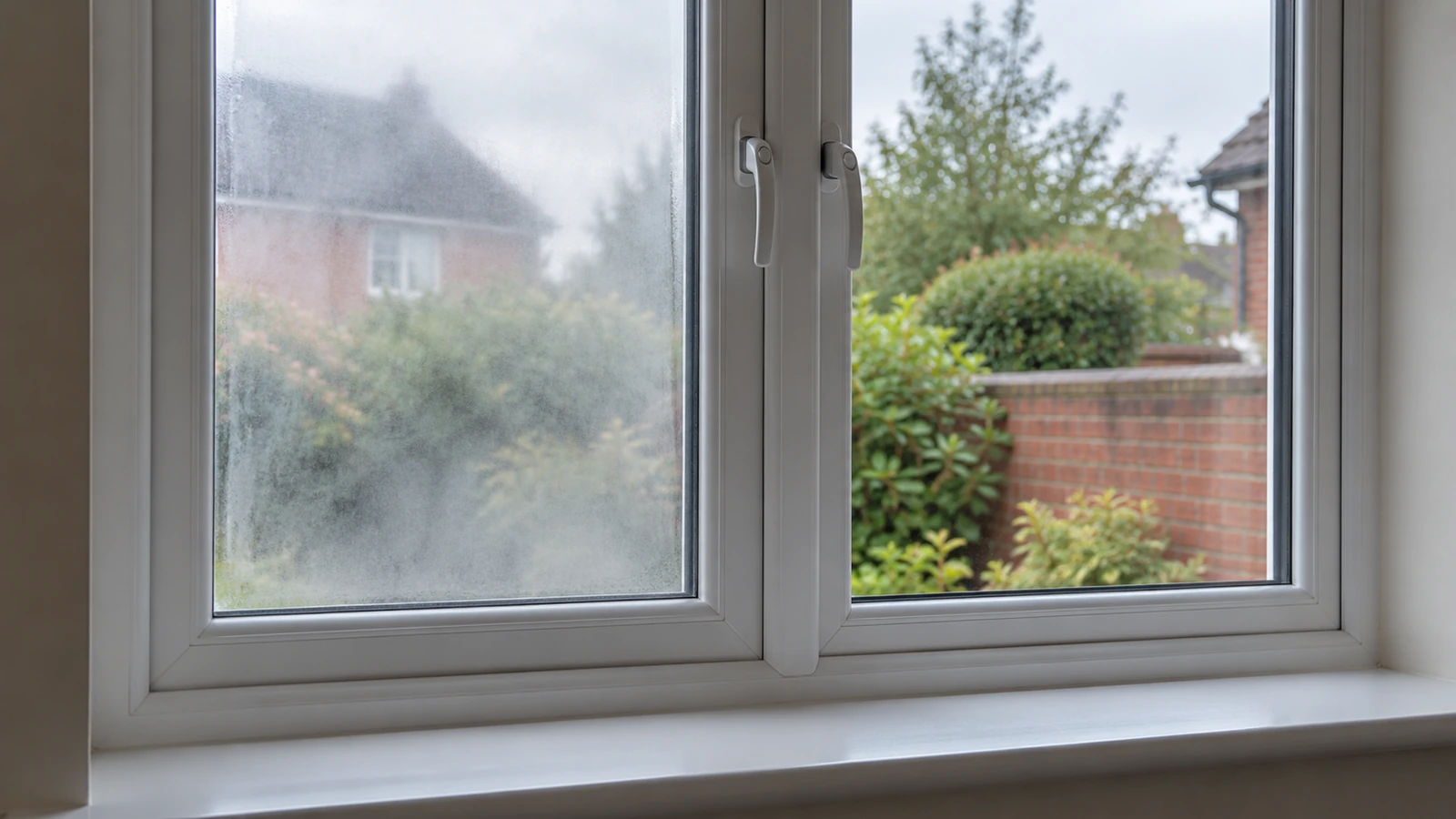
Misted double glazing can often be put right by replacing the sealed glass unit while keeping the existing frame. That is worth investigating when moisture is trapped between the panes and the frame still opens, closes and seals properly. A rotten frame, distorted opening sash or persistent leak needs a wider assessment before you order new glass.
The first question is where the condensation sits. Water on the room-facing surface, mist inside the sealed gap and droplets on the outside can look similar, but they call for different responses. Establish that distinction before comparing a small glazing repair with a complete window replacement.
Illustrative featured image generated with AI. Guidance checked on 17 October 2026 for UK homeowners; building requirements depend on the work and the UK nation.
Where is the mist on your window?
Moisture on the room-facing surface
If you can wipe the moisture away from inside, it is surface condensation. It can develop when moist indoor air meets cold glass. Note when it appears, whether extractor fans work and whether ventilation openings are clear. Replacing a glass unit does not, by itself, address excess moisture in a room.
Clouding trapped between the panes
When neither accessible surface clears the mist, the moisture may be inside the sealed unit. The two panes and the sealed gap between them form one component, separate from the surrounding window frame. The Glass and Glazing Federation’s repair guidance explains that condensation between the panes indicates seal failure and that the unit can usually be replaced after accurate measurement.
Take photographs when the clouding is most visible. It may look different at another time of day, so a clear window during the survey does not invalidate what you have seen.
Condensation on the outside
External condensation can occur on efficient glazing and is not, on its own, proof of a failed sealed unit. Energy Saving Trust’s windows and doors advice distinguishes this from moisture within the panes and condensation inside the home. Do not lean out or use a ladder to check the outer surface; ask the surveyor if its location is unclear.
Misted double glazing: glass unit or whole window?
Ask for a diagnosis before choosing the scope. A glass-only quotation and a complete replacement quotation cover different work, even when they concern the same opening.
| What you notice | Option to investigate | Question for the surveyor |
|---|---|---|
| Mist between panes; frame appears sound | Replacement sealed glass unit | Can the existing frame and glazing beads be retained? |
| A draught around an opening sash | Adjustment, hardware or weather-seal repair | Where is air entering, and will new glass address it? |
| Rot, distortion or a window that will not close securely | Frame repair or complete replacement | Which components have failed and can they be repaired? |
| Moisture on the room-facing glass | Assessment of moisture, temperature and ventilation | Is there evidence of sealed-unit failure as well? |
For example, a cloudy fixed pane beside a freely opening casement may be a suitable glass-unit job. A cloudy pane in a sash that drops and no longer locks needs both problems assessed. Specify each fault so that a clear view is not the only improvement included in the price.
What should a glazier check before replacing the glass?
Ask the glazier to inspect the surrounding frame, the opening sash, hinges, handles and seals. Explain any rainwater entry, sticking, rattling or draughts, including problems that happen only in windy weather. Request a written explanation if the recommendation is to replace the complete window.
The survey should establish the replacement unit’s dimensions and thickness, how it will be fitted and whether existing beads and gaskets can be reused. Approximate measurements help describe an enquiry; the supplier should confirm final manufacturing sizes rather than relying on your measurements.
Discuss the specification for that location: clear or obscure glass, thermal performance and any safety-glazing requirements. For patterned bathroom glass, ask how closely the replacement will match neighbouring panes. If you want better noise control, request a suitable specification instead of assuming every new unit offers the same result.
Keeping the frame also means keeping its opening style, appearance and much of its existing hardware. If those are the reasons you dislike the window, ask for a separate replacement option. That makes the additional work and its benefits easier to judge.
What should a quotation for misted glazing include?
Give each business the same list of affected windows. Number them by room and position, such as “bedroom one, left fixed pane”, and distinguish glass-unit replacement from frame repairs or complete windows.
- Survey and supply: the number of units, final measurements, glass specification and any survey charge.
- Fitting: labour, replacement beads or gaskets where needed, and separately identified hardware repairs.
- Access: arrangements for upstairs windows, panes above a conservatory or other difficult positions.
- Removal and finishes: disposal of old glass, protection of rooms and responsibility for disturbed trim or decoration.
- Total price: whether VAT is included or is not applicable, any minimum attendance charge, and the payment schedule.
- Aftercare: the written guarantee for the glass and fitting, exclusions and who handles a future fault.
Once you have described the faults, you can request double glazing quotes for the appropriate scope. The linked service introduces homeowners to independent glazing businesses; ask each responding firm to confirm what it has inspected and priced.
Avoid comparing a supply-only glass price with a fitted quotation that includes access equipment and disposal. If one contractor recommends complete replacement and another proposes a sealed unit, ask both to explain the difference before deciding which price is better value.
How to prepare for a glazing survey
You need a phone or camera, a written list of affected windows and any existing installation or guarantee paperwork. A tape measure is optional for approximate enquiry sizes. Leave glass removal, bead removal and final measuring to the glazier.
- Record the symptoms. Photograph the mist and note the room, floor and whether moisture can be wiped from the inside surface.
- List other faults. Record draughts, rainwater entry, sticking handles or difficulty closing the window without forcing it.
- Check existing paperwork. Find the original installer details and guarantee terms, and ask whether the fault is covered before commissioning work.
- Describe access. Tell the glazier about conservatories, extensions, narrow passages or furniture that affects access to the window.
- Request itemised options. Ask for glass replacement, necessary repairs and any proposed complete replacement to be clearly distinguished in writing.
Do not try to drill or dismantle the unit as part of these checks. If someone offers a mist-clearing treatment instead of replacement, ask what the treatment changes, what performance it promises and what guarantee supports that promise.
Ventilation, certification and finishing details
If complete windows are proposed, include ventilation in the discussion. In England, Approved Document F provides ventilation guidance; the applicable edition depends on the standards governing the work. Ask the installer to identify the requirements for your project. Wales, Scotland and Northern Ireland have their own requirements, so do not assume an England-based specification applies throughout the UK.
Glass-only work and complete window replacement also differ in their certification route. FENSA’s explanation of its coverage excludes repairs where the frame is not included. For complete replacements, agree how compliance will be documented in your UK nation. A guarantee and a building regulations certificate serve different purposes; keep the paperwork relevant to the job.
For a listed, leasehold or otherwise restricted property, establish whether consent is needed before ordering. Ask who will make good disturbed plaster, tiles, sealant and decoration, particularly when complete frames are being removed.
If damp patches extend beyond the window, describe them separately. AllPros’ guide to damp diagnosis and treatment provides wider context; a misted pane should not be treated as a diagnosis for damp elsewhere.
Frequently asked questions
Can you replace just one misted glass unit?
Often, yes. Ask a glazier to check the surrounding frame and confirm the size and specification. One failed unit does not automatically mean every window needs replacement.
Does a draught mean the double glazing seal has failed?
Not necessarily. A draught can come from the opening sash or the surrounding frame. Ask the surveyor to locate the air leak rather than assuming new glass will fix it.
Will new glass stop condensation inside the room?
It may improve the glass surface temperature, but indoor condensation also depends on moisture, heating and ventilation. A glass replacement should not be presented as a guaranteed cure.
Do I need to order the replacement glass myself?
It is usually clearer to make the glazier responsible for final measuring, specification and supply. If you arrange supply separately, agree who takes responsibility for an incorrect or unsuitable unit.
Will a glass-only repair come with a FENSA certificate?
FENSA excludes repairs where the frame is not included from its remit. Ask for a written description of the repair and its guarantee, and clarify the compliance route if complete windows are being replaced.
Start with the fault, then agree the work
A clear description helps a glazier distinguish a failed unit from a frame, hardware or ventilation issue. Ask for a surveyed, written scope before ordering, and keep the specification and guarantee with your home records. To take the next step, use AllPros’ home improvement quote service and describe the affected windows and the problems you want resolved.
