
If your air conditioning is running but not cooling, check the operating mode, temperature setting and obvious airflow obstructions first. If those checks do not help, book a fault diagnosis before agreeing to replacement parts or a refrigerant recharge. The same symptom can have several causes, so a useful repair starts with evidence.
This guide is for homeowners with fixed air conditioning, including wall-mounted split systems in bedrooms, home offices and garden rooms. It covers safe observations, the information an engineer needs and the questions that help you agree the right work. Portable units and car air conditioning need different checks.
Air conditioning not cooling: safe checks before booking
Start with the controls and what you can see from the floor. Use the operating manual for your exact model; symbols, filter arrangements and restart procedures vary.
Check the mode and set temperature
Fan mode circulates air without actively cooling it. Confirm that cooling is selected and that the requested temperature is below the current room temperature. Check any timer or schedule that might be changing the setting. Give the system the settling time specified in its manual after a change, rather than repeatedly switching it off and on.
If several indoor units share one outdoor unit, note the settings in each room. Tell the engineer whether the problem affects one unit or the whole system; this is more useful than assuming they all have the same fault.
Look for restricted airflow
Move curtains or furniture that block the indoor air inlet or outlet. From a safe position, look for obvious obstructions around the outdoor unit, such as stored items placed in front of it. Leave its casing, fins and wiring alone, and do not climb to reach it.
A dirty filter is another item to check. Only clean a user-accessible filter if the manual permits it, you can reach it safely and you follow the manufacturer’s instructions for switching off, cleaning, drying and refitting. Some inserts are disposable or need specialist care. Do not run the unit with filters removed as a workaround.
Daikin’s poor cooling checklist includes filters, airflow, control settings and closed doors and windows. It is a useful starting point, while your own model’s manual takes priority.
Consider what has changed in the room
Close open windows and external doors while cooling. Note whether the room now has more computer equipment, stronger sunlight or a larger connected area than when the system was installed. A unit that struggles only in a very hot conservatory presents a different problem from one that suddenly stops cooling a previously comfortable bedroom.
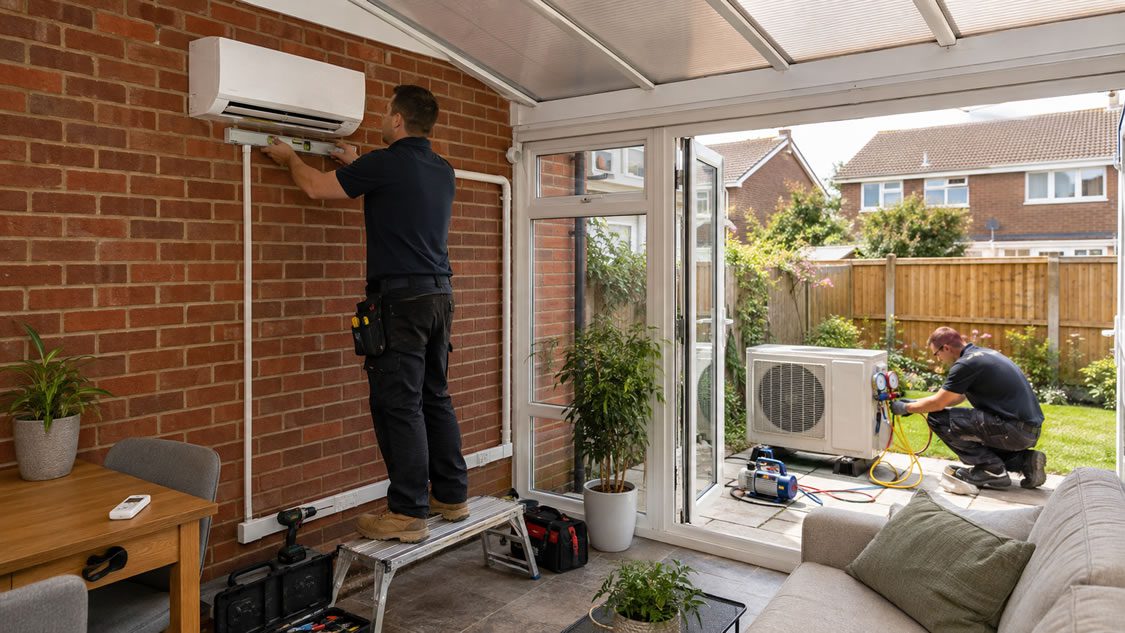
For room-specific planning, AllPros’ guide to air conditioning in a conservatory gives context. These observations help a professional assess the installation; they do not establish whether a component has failed.
What the symptoms can tell you
Record what happens without opening the equipment. The following distinctions help you describe the fault, but none provides a diagnosis on its own.
| What you notice | Useful detail to record | Next step |
|---|---|---|
| Air moves but the room stays warm | Mode, set temperature and whether airflow feels weaker than usual | Check controls and obstructions; arrange diagnosis if the problem continues |
| Only one room is affected | Which indoor unit struggles and what the other units are doing | Give the engineer the details of the complete system |
| Water drips indoors | Where it appears and whether it starts during cooling | Stop operation and contact the service company |
| Ice is visible | Where you can see it without opening a cover | Stop using the unit and seek advice; do not chip off ice |
| A light flashes or a code appears | The exact code, including letters, numbers and flashing pattern | Consult the manual and report it when booking |
| Burning smell or repeated electrical trips | What happened and when | Stop use; switch off the supply only if safe and arrange professional attention |
Do not keep resetting a breaker or try to bypass a protective device. Avoid wet electrical equipment. Manufacturer safety instructions include stopping operation for water leakage and abnormal conditions such as burning smells; see this Daikin split-system operating manual for an example. Follow the instructions supplied with your equipment.
Why fault diagnosis should come before a recharge
“It needs more gas” is a conclusion that requires investigation. Weak cooling alone does not establish a refrigerant shortage. Controls, airflow, the room’s cooling demand and equipment faults need to be considered before deciding on the remedy.
Ask an engineer proposing a recharge what evidence supports it and whether a leak needs finding and repairing. Where an F-gas leak is found, GOV.UK guidance requires repair as soon as possible and sets out follow-up checks where applicable. A repeated top-up without addressing an identified leak leaves the underlying problem unresolved. The official guidance on checking F-gas equipment for leaks explains the obligations.
An investigative visit may be chargeable even if you decide against the eventual repair. Agree that fee beforehand and ask whether it includes a written finding, how much investigation is covered and whether any of the charge is credited against further work.
When seeking air conditioning repairs, describe the symptoms rather than selecting a replacement part yourself. The linked service introduces customers to independent specialists for fixed-system diagnosis, repairs and maintenance. A quote enquiry does not book an emergency visit; confirm availability and any attendance charge directly with the contractor.
How to prepare for an air conditioning repair visit
You need a phone or notebook and any accessible installation or service records. The aim is to prepare a clear brief for a professional, with no dismantling or refrigerant work.
- Identify the affected equipment. Note the make and model from paperwork or a label you can read safely. Say how many indoor units are affected. Leave inaccessible details for the engineer.
- Record the pattern. Write down when the problem began, whether it is constant or intermittent and which mode was selected. Copy any displayed fault code exactly.
- List the checks already made. Include control settings, obvious obstructions and any filter care carried out according to the manual. Avoid guessing at the cause.
- Gather the service history. Find the installation date, warranty paperwork and previous repair invoices if available. Mention any recent recharge or recurrence of the same symptom.
- Describe access. Explain where the outdoor unit sits, whether a locked gate or neighbouring land is involved and when the property is available. Keep a clear route to the indoor unit.
- Agree the visit terms. Confirm the diagnosis fee, VAT treatment, cancellation terms and whether approval is needed before further work or parts are ordered.
Photographs taken from the floor can help with identification and access planning. Do not remove a cover, climb a ladder or reach over a balcony to obtain them. For a rented home, contact the landlord or managing agent before commissioning work on equipment you do not own.
What to agree in the repair quote
A diagnosis and a repair are separate decisions. Once the engineer has investigated, the proposed work should explain what was found and what the price buys.
- The finding: the identified fault, supporting observations and any remaining uncertainty.
- The remedy: the work and parts proposed, with the affected indoor or outdoor unit identified.
- The price: labour, parts, refrigerant where needed, access equipment, return visits and VAT clearly included or excluded.
- Testing: how the engineer will check that the original symptom has been resolved.
- Further approval: what happens if another fault is discovered or the initial repair does not solve the problem.
- Aftercare: the scope and duration of any parts or workmanship cover, plus useful maintenance advice.
Check experience with the make and type of system. For work involving F-gas refrigerant, ask for the relevant qualifications rather than relying on a general claim of being an air conditioning engineer. GOV.UK’s F-gas qualification guidance explains that the required certificate depends on the activity and equipment. Requirements can differ between Great Britain and Northern Ireland; ask the contractor to confirm those applying to your location and job.
A routine clean and an identified fault repair can have different scopes. If a service is proposed, ask whether it is expected to resolve the reported symptom or whether diagnosis and repair remain additional work. This guide gives no fixed repair price because the fault, parts and access are not yet known.
When should you compare repair with replacement?
Age alone is a poor reason to replace a system. Ask for a comparison when the repair is substantial, parts are difficult to obtain or faults keep returning. Consider the condition of the remaining equipment and whether the existing installation still meets the room’s needs.
For example, replacing an identified failed component may be sensible in an otherwise sound system. A major repair to equipment with several unresolved problems needs a broader assessment. These are decision criteria, not promises that a particular fault will be economical to fix.
Compare complete proposals. A replacement quotation should identify the equipment, removal of the old system, installation work, electrical requirements, commissioning and warranty terms. A repair quotation should explain its scope and any known limitations. Avoid comparing a small repair figure with a replacement price that omits installation.
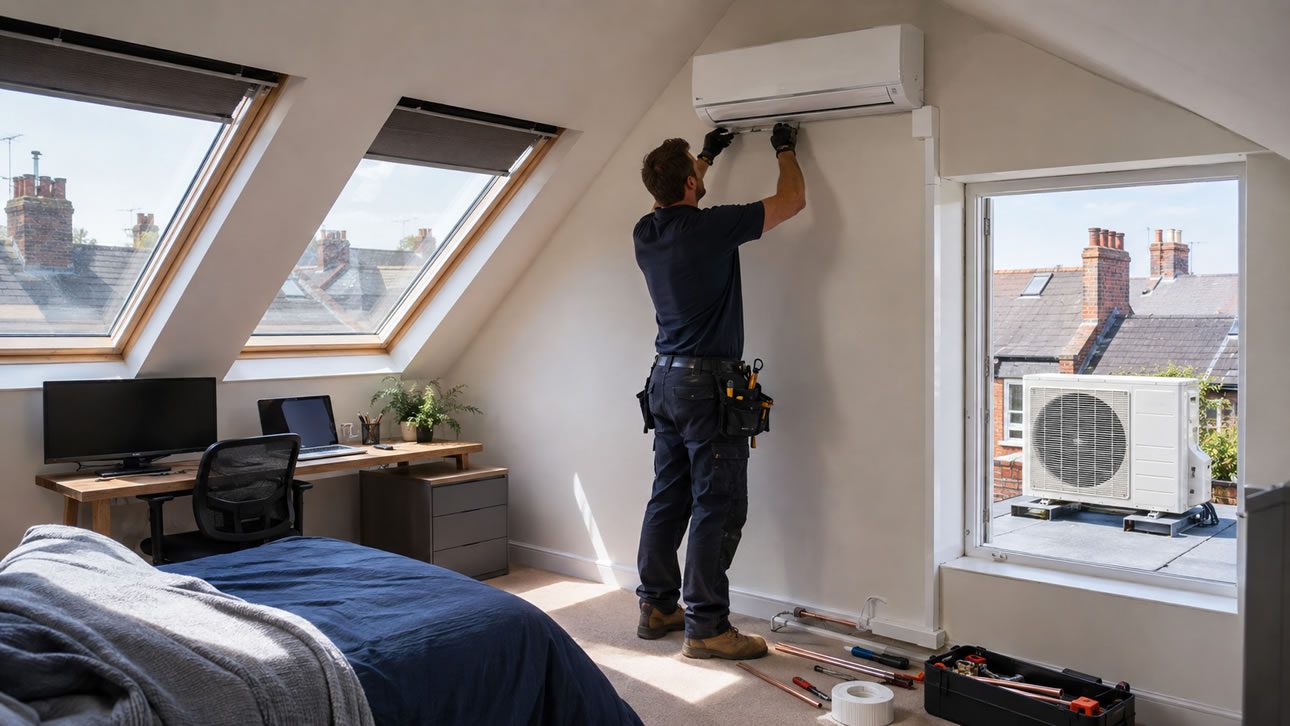
If the problem is concentrated in a converted attic, our guide to air conditioning in loft conversions can help you frame questions about the room and installation before buying new equipment.
Frequently asked questions
Can I book a repair without knowing which part has failed?
Yes. Describe the symptoms, affected units and any fault code. An engineer can investigate before proposing parts; agree any diagnosis fee before the visit.
Does warm air mean the system needs a refrigerant recharge?
No. Warm air alone does not establish low refrigerant. Check the controls and obvious airflow restrictions, then ask for diagnosis if cooling does not return.
Should I keep using a unit that leaks water indoors?
Stop operation and contact the service company. Keep away from wet electrical equipment and follow your model’s instructions for switching off safely.
Is the diagnostic visit included in a free quote enquiry?
Not necessarily. Requesting a quote may be free while an engineer’s investigative visit is chargeable. Confirm attendance costs directly before booking.
Can I clean every air conditioning filter myself?
No. Only carry out the user maintenance permitted in your model’s manual and only where access is safe. Disposable inserts and specialist filters may need different treatment.
Book the right next step
Send a short fault description, model details if known and an honest account of access. Ask for investigation terms first, then approve a clearly defined repair. You can also use AllPros’ home improvement quote service to describe your air conditioning project and seek responses from suitable local professionals.